
What Is an As-Built Survey After Construction?
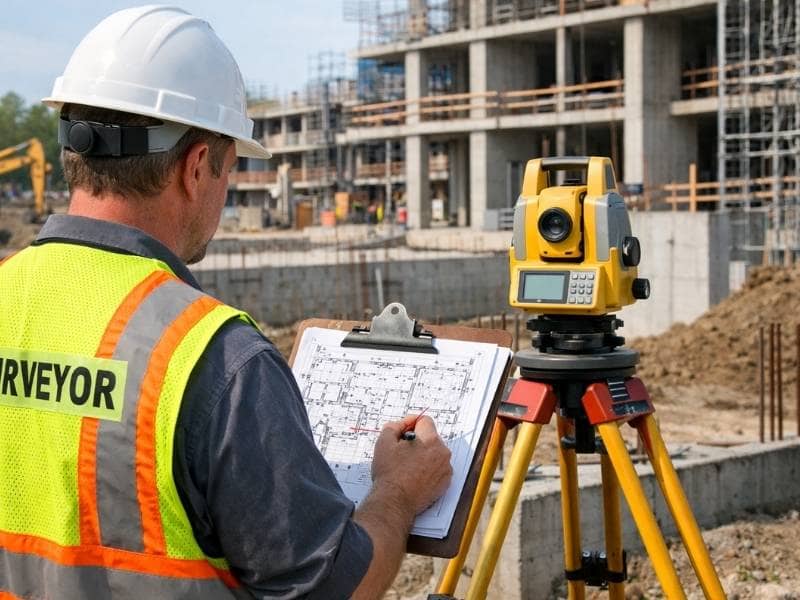
Construction rarely goes exactly as planned. Walls shift slightly. Utility lines get rerouted. A foundation ends up a few inches from where the original drawings said it would be. By the time a building project is finished, what is actually on the ground may not match what was on paper when work began. That is exactly why as-built surveys exist. If you are finishing a construction project, understanding what an as-built survey is and when you need one can save you from serious problems at the final inspection stage and beyond.
What Is an As-Built Survey?
An as-built survey is a survey done after construction is complete. It documents what was actually built, not what was originally designed. A licensed land surveyor visits the finished site, takes precise measurements, and records the true location of every structure, utility, and improvement on the property.
The result is a certified drawing that shows the actual conditions on the ground. This document is sometimes called a record drawing or a post-construction survey, but the idea is the same. It captures reality, not the plan.
What Does an As-Built Survey Document?
The scope of an as-built survey depends on the type of project, but most cover the following:
- The actual location of buildings and structures on the lot
- The finished floor elevation of the structure
- The position of underground utilities including water lines, sewer lines, and storm drains
- The location of driveways, parking areas, and paved surfaces
- Retaining walls, fences, and other site improvements
- Setback distances from the structure to the property lines
- Any differences between what was designed and what was built
Each item is measured and recorded with the same precision a surveyor uses for any other type of certified survey work.
Why Is an As-Built Survey Important?
There are several reasons why this document matters, and they cover different stages of a project’s life.
It confirms setback compliance. Nashville’s zoning codes require structures to sit a certain distance from property lines. Once construction is done, an as-built survey proves the building is where it is supposed to be. Without it, you are relying on estimates, and estimates are not accepted as proof.
It supports a certificate of occupancy. Many municipalities, including Metro Nashville and Davidson County, require a survey confirming final structure placement before they will issue a certificate of occupancy. This is the document that officially allows a building to be used or occupied. Without it, a new home or commercial space cannot legally be opened.
It protects owners during future sales. When a property with a newer structure is sold, the buyer’s title company may ask for documentation confirming the building is within the property lines and meets setback requirements. An as-built survey provides that confirmation clearly and officially.
It gives lenders accurate information. Construction lenders sometimes require a final as-built survey before releasing the last draw on a construction loan. It confirms the project was completed as agreed and that the structure is positioned correctly on the lot.
It creates a permanent record. Years down the road, when a property is renovated, expanded, or sold again, having a certified record of what was built and where it sits is genuinely useful. It answers questions that would otherwise require a brand new survey to resolve.
Who Typically Needs One?
As-built surveys are most common on new construction projects, but they are not limited to large developments.
Homeowners building a new house will often need one before their final inspection is approved. Contractors and developers working on commercial buildings, apartment complexes, or mixed-use projects almost always need one as a standard part of project closeout. Builders working in rapidly developing parts of Davidson County, where lot lines are tight and zoning setbacks are strictly enforced, benefit from having this documentation even when it is not specifically required.
In some cases, an as-built survey is also needed on existing properties where unpermitted additions or structures were built in the past. Before those structures can be permitted or a property can be sold cleanly, a surveyor needs to document what is there.
How Is It Different From Construction Staking?
These two surveys happen at opposite ends of a project. Construction staking is done before building begins. It marks where structures should be built based on the approved site plan. An as-built survey is done after construction is finished. It measures where structures were actually built and compares that to the approved plan.
Both are important. One guides the work. The other confirms it.
What Happens During an As-Built Survey?
A licensed surveyor visits the completed site with GPS equipment and a total station. They locate the property corners, measure from those corners to the finished structures, and record the position of utilities, paving, and other improvements.
The surveyor then takes all of that field data back to the office and produces a certified drawing. That drawing shows the completed project as it stands, with all measurements confirmed and the surveyor’s stamp and signature attached.
Turnaround time varies depending on project size, but most residential as-built surveys are completed within one to two weeks of the field visit.
How Much Does an As-Built Survey Cost?
Cost depends on the size of the project, the number of structures, and how complex the site is. A standard residential as-built survey for a single-family home typically runs between $400 and $900. Larger commercial projects will cost more based on the scope of work involved. Always ask for a written quote before scheduling the work.
Frequently Asked Questions
Is an as-built survey required for every construction project in Tennessee?
Not always, but it is required in many situations. Metro Nashville and Davidson County often require one before issuing a certificate of occupancy on new construction. Some lenders also require one before releasing a final construction draw. Check with your permit office and lender early in the project to find out what is required for your specific job.
What is a finished floor elevation and why does it appear on an as-built survey?
A finished floor elevation is the measured height of the lowest floor of a structure compared to a standard reference point called a datum. It appears on as-built surveys because it is used to verify whether a building meets local floodplain requirements. In flood-prone areas of Nashville, this measurement is also needed for flood insurance purposes.
Can an as-built survey reveal problems after construction?
Yes. If a structure was built in the wrong location, too close to a property line, or over an easement, an as-built survey will show it. Catching these problems early gives the owner, contractor, and attorney a chance to resolve them before the situation becomes a legal dispute or a barrier to selling the property.
What is the difference between an as-built survey and an as-built drawing?
An as-built drawing is typically prepared by a contractor or architect and shows changes made to the original design during construction. It is an internal project document. An as-built survey is a certified legal document prepared by a licensed land surveyor. It shows the actual positions of structures and improvements on the ground, and it carries legal weight that an as-built drawing does not.
How long should I keep my as-built survey?
Keep it permanently. It is a certified record of your property at a specific point in time. Future owners, contractors, lenders, and permitting agencies may all need to reference it. Store a digital copy alongside your other property documents so it is easy to find when it is needed.