
What Developers Should Know About Easements
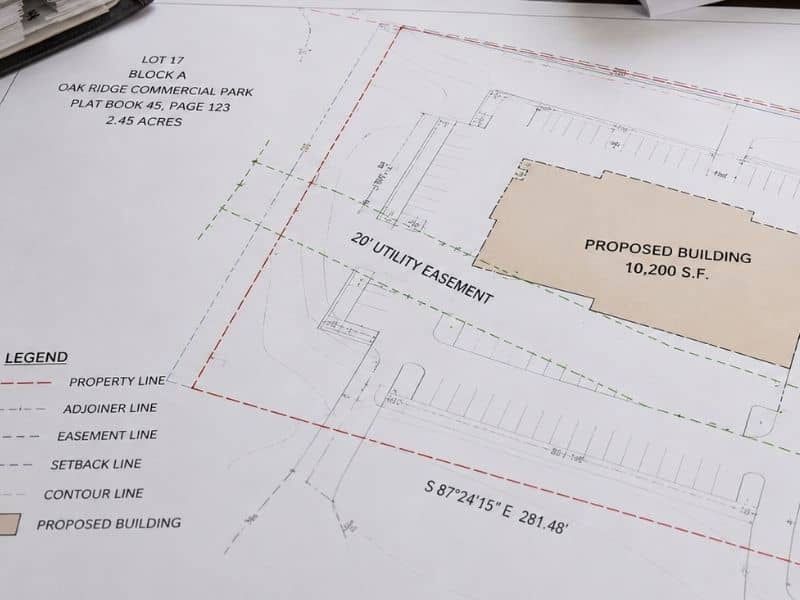
Picture this. You’ve closed on a parcel, your architect has finished the site plan, and the project is finally moving. Then a letter arrives from a utility company. They have a recorded easement running directly through your planned building footprint. Construction stops. Lawyers get involved. The deal you spent months putting together starts falling apart.
This happens more than most developers want to admit. Easements are legal rights that allow someone else to use a portion of your property for a specific purpose. They don’t disappear when ownership changes hands. They stay attached to the land itself. Find them during due diligence, or find them the hard way.
What an Easement Actually Is
An easement gives a person, company or government entity the legal right to use land they don’t own. The key word is “use,” not “own.” The property title stays with you. The right to access, cross or restrict a portion of it belongs to someone else.
Most easements are permanent. They get recorded in the public record and pass from owner to owner with the deed. When you buy a property, you buy whatever easements came with it.
The Two Types That Matter Most to Developers
Appurtenant easements benefit an adjacent property. A shared driveway, a common access road, a path connecting one parcel to a public street. These typically involve two neighboring parcels, and both are affected when either property sells.
Easements in gross benefit a company or entity rather than a neighboring parcel. Utility corridors, pipeline rights-of-way and telecom infrastructure fall into this category. The utility company holds the right regardless of who owns the land underneath.
Where Easements Hide
They don’t announce themselves. Most developers who get burned by an easement didn’t miss it because they were careless. They missed it because they didn’t know where to look.
Easements live in recorded deeds and historical title documents, plat maps and subdivision records, utility company files and municipal records. Some show up on prior surveys. Many don’t get discovered until someone actually orders an ALTA survey.
What a Land Survey Shows You
A properly executed ALTA/NSPS survey locates recorded easements on the ground. You’ll see exactly where a utility corridor cuts through the parcel, how wide a drainage easement runs, and whether any existing improvements already sit inside a restricted area. That’s information your site plan needs before your architect draws a single line.
What a Title Search Adds
The survey shows where. The title search shows why. Schedule B of a title commitment lists every exception to coverage, and that’s where easements, restrictions and recorded agreements live. Read it carefully. Every line in Schedule B is something that could affect your project.
The Easement Types Developers Hit Most Often
Utility easements are the most common. Power, gas, water and telecom companies hold them across millions of parcels. They typically run 10 to 30 feet wide. You cannot build permanent structures over them without the utility holder’s written consent.
Access and right-of-way easements give a neighboring owner or the public the right to cross your land. If one cuts through a planned parking structure or building footprint, your entire site layout may need to change.
Drainage easements are often required by municipalities, particularly on parcels near water or in flood-prone areas. They restrict grading, filling and construction within the drainage path. They can shrink your buildable area more than you’d expect.
Conservation easements limit development permanently on portions of a property. They’re increasingly common on land near wetlands, floodplains or environmentally sensitive areas. A conservation easement recorded on part of your parcel may reduce buildable acreage by more than your pro forma assumed.
How an Easement Can Reshape Your Project
The financial impact depends on where the easement sits and how wide it runs. A utility corridor through an undevelopable corner of a site is manageable. One cutting through your planned building pad is a different problem entirely.
Most easements prohibit permanent structures within their boundaries. Some restrict underground work too. Others only apply above grade. The language in the recorded document controls, and that language varies.
When You Can Build Near an Easement
Some easements allow surface use as long as nothing permanent gets built. Parking lots, landscaping and paved surfaces are sometimes permitted within easement areas. A licensed land surveyor can locate the boundaries. A land use attorney can tell you what the recorded language allows for your specific project.
When You Cannot
Encroaching on a utility easement without written permission from the holder creates legal exposure. Utility companies have the right to remove encroachments, sometimes without compensating the property owner. Don’t build on an easement and hope no one notices. They notice.
What to Do Before You Close or Break Ground
Three steps. No shortcuts.
Get an ALTA/NSPS survey. This is the standard for commercial and development transactions. It locates all recorded easements on the ground and ties them to the actual property boundaries. A basic boundary survey won’t always catch everything.
Review the full title commitment. Don’t skim Schedule B. Every exception matters. If you see an easement listed and don’t understand what it restricts, find out before you close.
Bring in a land use attorney. Surveys and title reports show you what exists. An attorney tells you what it means for your project. That’s a different question, and it’s worth answering early.
Can You Get Rid of an Easement?
Sometimes. Three realistic options:
Negotiate a release. Utility companies occasionally agree to relocate easements when a developer funds the cost. It’s not common, but it happens on larger projects where the economics support it.
Prove abandonment. If an easement hasn’t been used in years and there’s documented evidence, a quiet title action may establish that the right has been abandoned. This is a legal process, not a quick fix.
File a quiet title action. If an easement was improperly recorded or the holder’s rights have lapsed, a court can extinguish it. Expect months, not weeks.
Build the discovery process into due diligence. Trying to resolve an easement issue after closing is expensive, slow and occasionally impossible.
Frequently Asked Questions
Does an easement always show up on a property survey?
Not automatically. An ALTA/NSPS survey is designed to locate recorded easements on the ground. A basic boundary survey may miss them. Always specify the survey type before ordering.
Can I build over a utility easement?
Not without written consent from the utility holder. Even minor structures can trigger removal orders. Get permission in writing before any work starts inside an easement area.
What if I bought land and didn’t know about an easement?
If it was recorded before your purchase, it was part of what you bought. You may have a claim against your title insurance company if the easement was missed in a policy they issued. Talk to an attorney.
Who maintains the area within an easement?
Usually the property owner. You own the land, even within an easement area. You just can’t always control what the easement holder does on it. The recorded agreement may specify maintenance responsibilities.
Can a developer negotiate to relocate an easement?
Yes, but it takes time and money. Utility companies may agree to relocate infrastructure if the developer covers the full cost. Municipalities may require a formal application and approval process. Get any agreement recorded before construction starts.